Saturday, 25 June 2022

Waspy woman

A week ago I was mowing the edge of my front lawn and brushed against a shrub of my neighbours', which had been planted (not by them, but by the people they bought from last year) quite close to the fenceless boundary between us (which is 'mine', and marked by a row of cemented bricks). 

Anyway, this isn't about a boundary dispute (we get on very well) but a tale of unwelcome guests, as my brushing against that shrub disturbed a wasps nest we knew nothing about. The reaction of the wasps was immediate. Like a swarm of jet fighters, they flew out to defend their newly-established citadel, and buzzed angrily about me. Three of them - Top Guns all - homed in on my right thigh and stung me there before I could retreat. (Why does my right leg always get the punishment?)

The stings were like hot needles, a bit like having some electrolysis done, if you ever have. 

After the momentary smarting faded, I felt nothing and finished the rest of my front-garden mowing. Then I rang my neighbours' doorbell to give them the disturbing news that they had a wasp nest on their hands. This would be especially bad news as they have two young boys. Still, the remedy - calling out a wasp man - was easy to arrange. Within the hour, my neighbours had got a local man round who, with protective suit donned, and lethal chemical dust probe/puffer at the ready, did his stuff. 

The wasps fled, not stopping to claim asylum, nor argue their eviction on a legal technicality, nor to insist on their human rights. Presumably the queen wasp, who couldn't of course get away, died surrounded by her most faithful courtiers. Some would have stayed with her to catch her famous last words; others (all of them plotters and intriguers) to learn her political will and testament and jostle for position in the post-queen vacuum. But they too would have died. As also would have the thousands of unhatched baby wasps. An epic Götterdämmerung indeed. 

I don't know what my neighbours paid for this call-out, but when I had a wasp nest in my attic in July 2010, and called out Rentokil (who must be among the most expensive), I paid £89 for a 'next day' service. I hope my neighbours paid no more than that in 2022. 

I was still not having any physical reaction from the stings. My neighbours were most concerned. But clearly I wasn't allergic to wasp stings. Actually, it had been so long since I'd been stung by a wasp - was it in the 1980s? - I couldn't have said what my reaction might have been. 

Within a day, light pink patches had formed around the sting sites, and these turned darker pink and spread a little. Now and then I felt a slight itchiness, but it could be ignored. There was no tenderness. And really that was all. Nothing that could be called discomfort, let alone a worry. And now, a week later, the pinkness has faded. I should think there will be very little trace of those stings by my birthday on 6th July.

The last time I was comprehensively attacked by insects was in New Zealand in 2007. The west coast of each island - but particularly the west coast of South Island - was notorious for the biting Blackfly or Sandfly, or Te Namu in Maori. In Milford Sound visitor centre was a notice that explained how this annoying insect came to inflict humans: 


No doubt a similar explanation applies to English wasps. 

The Blackfly were a dreadful nuisance. All you could do was cover up the parts they loved to bite, no matter what the humidity. This is a close-up of one trying to get into our campervan. Note the 'devil's horns':


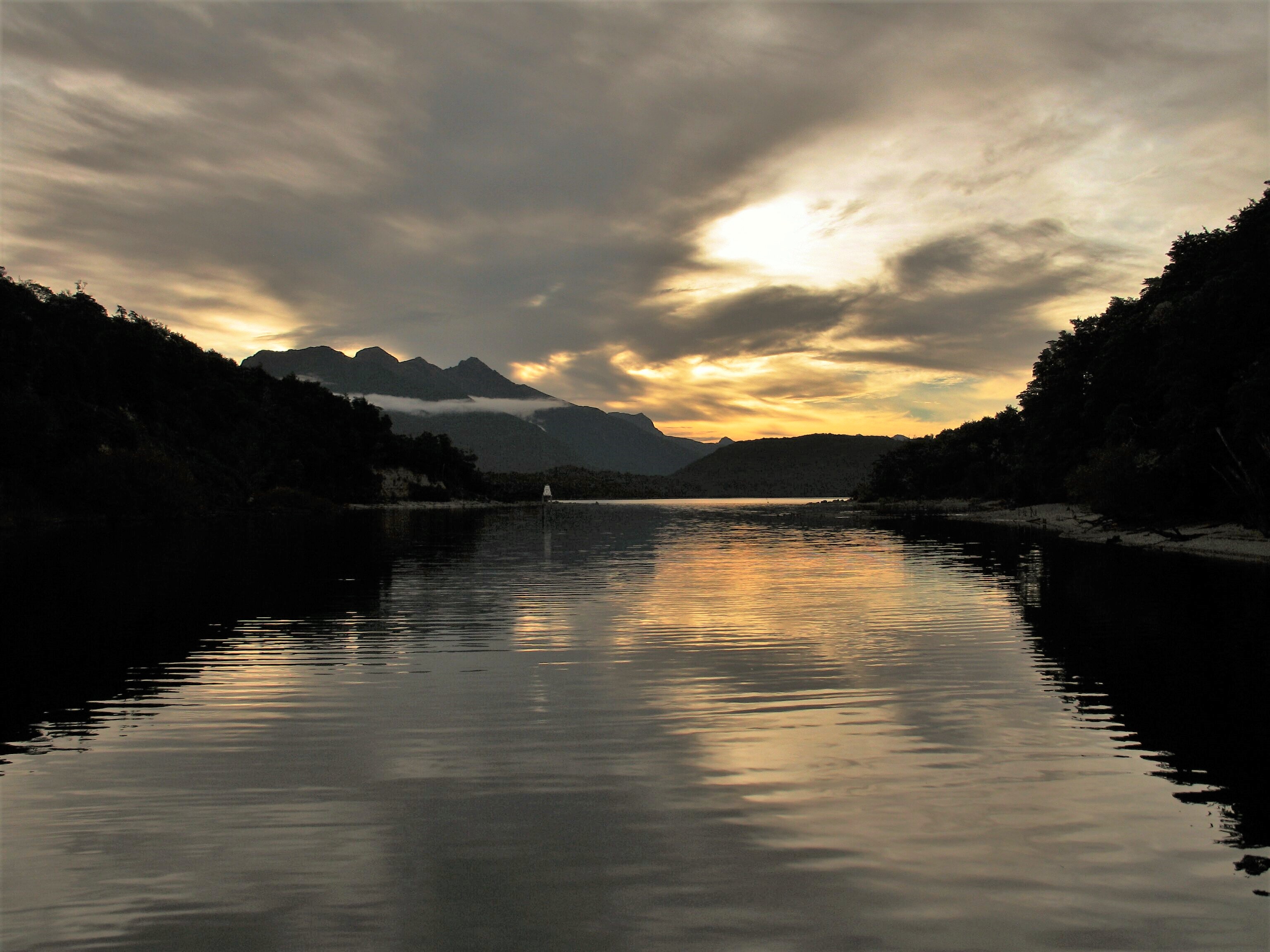
Their existence rather took the edge of visiting south-west South Island, which had glaciers, gorgeous empty beaches and fabulous coastal scenery like Norway's. I can't resist a few shots to show what I mean.


All those views were to some extent compromised by the pesky Blackfly, who never let you alone unless well out to sea, or, if on land, well away from any kind of water. I'm glad to say that the New Zealand landscape made the greater impression on me, but I've not forgotten the Blackfly in Fiordland, any more than I've forgotten equally feared encounters with midges on the wet west coast of Scotland.

How sad to think that I shall almost certainly never be able to go back and repeat that 2007 blockbuster holiday in New Zealand. Partly for health reasons, partly because of the cost, and partly because the world has changed and the risks of flight over certain territories seem greater. Sigh. 

Thursday, 23 June 2022

A possible name

I know this is trivial. But this is an autobiographical blog, and so all personal trivia is germane to what the blog is for. 

I am still thinking about a name for my new Leica X Vario camera. All my most important electronic personal possessions get named nowadays. It all started when Bluetooth became useful, and it was convenient to give individual devices an easy-to-remember name for detection, pairing and ongoing connection purposes. Then it became a personal tradition to name successive mobile phones, regardless of the Bluetooth angle. This has extended to laptops. And most recently, to my cameras.  

I give my devices female names. I don't want any bad boys among them. They also have to be names compatible with my own, and my particular approach to life. These are essentially gadgets so close to my heart that I regard them as friends. And just as there are real people with names that put me off - perhaps because of negative or unfortunate associations - so I find myself being very picky about naming a device I use all the time, and must absolutely rely on. So no male names, nor any with bad vibes. 

I also need to reserve a set of possible names for my next car, even though that acquisition is years away now. 

And I am reluctant to re-use a name. Thus Lili, the name I gave to my previous Leica camera (sold on after only a few months), will never be given to another device.

This rather narrows down the possibilities! A wide choice remains, but most are not suitable, or in some way unappealing.

Of course, my latest camera has its own proper name - the Leica X Vario - which abbreviates to LXV. There's nothing wrong with LXV. But I do occasionally call my photographic friend LVX by mistake. Some kind of proper name would avoid this. 

Nothing as appropriate as Lili has so far come to mind. I'm definitely not going to call LXV Helga or Gretel or Birgitta or Hilda, even though (like Lili) LXV hails from Germany. 

Today I thought of Lexy - or Lexy Vee in full. 

Hmm...it's easy to remember, and a good play on the initials LXV. But does it suit my camera? Lexy. I'd associate a name like that with an exciting and extrovert personality, one that stands out from the crowd. The name of a go-getter, a celebrity. It's almost a stage name. Is it however suitable for a black object clutched by a sober senior lady with a gammy leg? On the other hand, why not? Maybe the two of us can together become a photographic force like never before! 

Lucy and Lexy. 

I'll mull it over. And if any reader has a take on this subject, do let me hear it.


Same day sequel

To be honest, I've had more pressing matters things to think about today, such as arranging payment for the boiler installation work. And trying to work out which parts of the unexpected electrical work must be done, as opposed to what might ideally be done. It's very much a case of 'I could afford to have my home comprehensively rewired if only this had cropped up next year'. As it is, I can - at the moment - only find the money for a limited amount of work, unless I completely blow my remaining emergency fund, which would be most unwise. I don't want to take out a loan.

So there's been precious little thought given to camera names. It's just not important enough. 

I've a sneaking feeling that I will carry on referring to my camera as LXV. I'm sure it won't mind.

Wednesday, 22 June 2022

Limpalong Lucy

Fiona has finally had her offside headlamp clarity restored. I got the same people who repaired last winter's front end damage to handle the job professionally. 

It had to be done, because the winter front-end part replacements had included a brand new nearside headlamp, and once installed, that made the old one on the offside look dowdy and discoloured. Now it looks new too. It lifts Fiona's entire front appearance, quite apart from giving me a slightly brighter view of the road ahead at night. I suppose, however, that I will start getting flashed, now that both Xenon main beams will be piercing the gloom equally well. 

This marks the end of a long list of things that Fiona has needed since last November, all paid for so that she can maintain her role as a reliable and still-stylish senior lady's chariot. Fiona is gradually acquiring 'modern classic' status. She will certainly be deserving of that title when she shoots through the 200,000 mile barrier in a couple of years' time. Then 300,000 miles will be the goal. Who knows, given current conditions, it may take a very long time for me to get enough money together for a replacement battle-wagon of similar calibre. I therefore expect to invest heavily in servicing, repairs and replacement parts in the years to come, until the right moment comes to let her retire. All the advice I've had suggests that I should be in no hurry to go all-electric. The infrastructure isn't yet there, and the automotive technology needs a breakthrough. So it's maybe 2030 now.

Fiona remains highly enjoyable to drive, and (for the moment!) is in tip-top condition. With the boiler installation finished, I was no longer tied to the house. So this afternoon I felt free to drive to Ferring, on the Sussex coast beyond Worthing. 

I parked by a wide greensward that fronts a green gap that stretches from the shore all the way inland to the South Downs some miles away to the north. An unbroken strip of countryside, apart from a narrow belt of housing on the west side of Goring-by-Sea, which is anyway hidden by trees. How this break has survived intact between the almost-continuous bungalow and smart beach house developments along this part of the Sussex coastline is a mystery. I really do not know. It isn't, for instance, part of the South Downs National Park and therefore protected by having that status. Hungry developers must constantly be pressing to buy a chunk and build on it. I hope they are forever thwarted.

It was a lovely sunny afternoon: warm but not not hot, as there was a gentle breeze. I'd brought along a folding chair acquired last March and not so far used, plus a folding canvas seat to put my legs up on. I set these up, and relaxed in the sun for twenty minutes, observing the people passing, the couples basking, and aeroplanes droning across the sky (well, only one actually, though it certainly looked vintage). In the distance, the shingle; and beyond that, the blue sea. Fabulous. 

I soon got bored, just sitting. So I put the chair and seat away in Fiona, and - armed with LXV and my walking stick - I set forth to first visit the shore line, and then head westwards to the Bluebird Café for refreshment.

Hurrah! The tide was out, though it had turned and was just starting to come back in. Sand and seaweed were however exposed for the time being. The stick was handy for keeping my footing as I crossed the slippery green weed. Little waves lapped, the water sparkled, and LXV got some exercise. I had some conservation with a woman waiting for her husband, playing in the shallows with their dogs. By the time we'd finished, it was clear that the tide was advancing rapidly, so it was goodbye and another careful journey back across the weed to the shingle. By now my right leg was starting to complain a bit. I'd only walked half a mile at most. But I wanted to get some proper exercise in, so I set forth for the Café, another half a mile ahead. 

My leg was very ready for a rest by the time I reached the Café - after only a mile or so of walking. Or more correctly, limping. Not good. A rest restored it, however, and the aching vanished. Amazing what tea and cake can do! 

I should explain that although the X-ray I had revealed 'mild osteoarthritis' there is never any sharp pain. Only an ache, which comes on after 5,000 steps or so in the same day. I can continue to 10,000 steps and beyond, but the aching after 5,000 steps is only manageable if I take rests, and get the weight off my right leg. There is absolutely no sensation of bone grinding against bone - or nearly doing so through thin cartilage - underneath my knee cap. Only the kind of ache you associate with damaged muscles, and possibly overstretched tendons, felt immediately above and below the knee joint. And sometimes (as today) in the ankle. 

I presently believe that the bone-on-bone thing lies in wait for me sometime ahead, but isn't the pressing issue right now. The immediate problem is with the muscles and tendons that hold the knee joint together, or are attached to it. I do hope that's the case, because although it may take a long time, muscles and tendons do heal up. So I have some hope of getting back to brisk (but not over-ambitious) walking by the end of the year. Meanwhile, though, I can't walk fast or far, and feel the need to bring along a stick for support, if the steps start mounting up.

Back at the car, I saw that I'd taken about 9,000 steps, and it certainly felt as if I had. I sank into Fiona's sumptuous leather seating with great relief. Huh! I'd barely covered two and a half miles. I could surely do better than that a month ago. It does seem that very warm weather isn't good for osteoarthritis sufferers, even though you'd think it might be. Perhaps my leg will feel better, and be capable of more, when cooler autumn weather arrives.

It's all such a nuisance. And rather inhibiting. I couldn't (for instance) possibly walk around central London at the moment, or the centre of any other big place. Nor could I do a long forest tramp. Unless, of course, I tackled these things with plenty of short stops. I've noticed that my leg doesn't feel tired and achy when flitting to and fro around my house and garden. But then that's all done in a series of bursts, with frequent pauses in between. So a repeated 'on my feet, off my feet' alternation is clearly a way of managing this impairment, and getting things done. 

Tuesday, 21 June 2022

Last fling for gas

I've been home for several days, and feel pretty tired. I've had a lot to do, preparing for the installation of a new gas boiler. It's done now; but the job involved extra work not anticipated, and an ongoing electrical issue that may prove costly to sort out. 

I do still have sufficient money in hand to cover any likely extra expense. I can fund this. But I fear that my dream of paying outright, in my own cash, for an all-electric car in 2026 or 2027 is now in tatters. In the last seven months I have spent thousands of pounds on the car, the caravan, my photography, and now the house. 

I'm not actually complaining. Things do wear out, and accidents occasionally happen. I live an agreeable and comfortable life, and I naturally want it to continue: therefore the costs of repair and replacement have to be cheerfully borne. Creeping old age adds real force to this. It's clearly sensible that I spend money on whatever most matters to me, while I remain in a fit state to enjoy it, and not merely hoard money for a rainy day. If I can also save with a definite goal in mind - such as that new car - then so much the better. But I can't neglect the basics, such as my home. 

That's why I'm philosophical about blowing over a year's savings in such a short time. It's all gone on worthwhile things that I hardly need to justify. The exception is my photography, but even that supports and enhances my day-to-day life, and the results form an interesting archive of lasting reference and cultural value.

So what went awry with the new boiler installation? There was one little thing of no real consequence, and two big things which have added (or will add) to the time taken and the cost. 

The little thing was having to put in a pipe with a directional nozzle to raise and deflect the new boiler exhaust gasses away from my neighbour's side window. There was - visually - enough of a gap between the houses. But measurement revealed that I was in fact 10cm too close for merely venting those exhaust gasses sideways through my brick wall, and letting them disperse randomly. Indeed, my neighbour already had a deflector. Now we both have.

The first big thing was discovering that I had a gas leak underneath the house. The original iron pipe, of 1964 vintage, and set in concrete, was the culprit. It must have rusted through. The solution was to run a new gas supply pipe from my garage (where dwelleth the smart meter) upwards, then through, the adjacent side brickwork of my house, then across the floor of my attic (which is only very partially boarded) and out through the opposite brickwork on the other side of the house; then externally down to the boiler and the gas cooker, reaching them both through the brickwork at that level. So a fair bit of precision drilling, and quite a bit of pipe jointing and welding. 

The second big thing, discovered accidentally when putting in a new water pump and thermostatic valve, was that an old unused metal conduit in my airing cupboard was electrically live and dangerous. A wire somewhere within must be touching the inside of the conduit, arguing that the original 1964-vintage wiring in my home must have badly deteriorated in places. The electrician called out to look at it found that one of the ring circuits was defective. He immediately cut off the power on that particular circuit, pending repair. He also said that my consumer unit urgently needed upgrading, as it didn't give RCD protection for all the wiring runs in the house. Yikes! I could have been sizzled! So I'm now looking at least partial rewiring (it must be nearly sixty years old, most of it; the 2005 conservatory being the exception) and a new consumer unit. More expense! But electrical safety is paramount.

I console myself by thinking that no improvement to one's home is money badly spent, especially where dodgy electrical circuits are concerned.

The faulty (and presently disconnected) ring circuit powered my TV, freeview box and DVD player. No using those then for the time being! But that's no loss. I can still stream TV to my phone or laptop via 4G mobile internet, if really compelled to watch.

But I can still use my cooker, fridge,  freezer and shower unit normally, plus of course the new boiler. And if I rig up an extension cable, my washing machine. I can also power the caravan outside. For the rest - a couple of table lights and sockets to recharge various gadgets - a couple of ordinary extension leads are now in place. 

To the end, my old boiler was firing up in a lively manner, but only because work had been done before last winter to fix a pilot light that had a tendency to go out. It was a Potterton boiler from the 1990s, mostly reliable but ageing and potentially troublesome, perhaps terminally so in the coming winter. In fact the last service had revealed signs of water leakage on the casing. Not good.

Meanwhile it worked, but was also pretty inefficient at turning gas into heat. So it was wasting money, and hastening climate change.

It was time to install something much better. So now I have a modern Glowworm, still the same type of boiler, but using up-to-date tech. Not only is it almost silent when firing, it heats water faster and hotter. And yet I anticipate using less gas, which will save me money and help the planet a bit. I agree that it's not the very best device for heating I could have installed, but I had too many financial constraints for fancy heat pumps, solar panels, and so forth.

I've a feeling that at current gas prices my boiler upgrade will pay for itself in half a dozen years. So it's an investment of a sort. The first bit of real TLC my house has had for a long time. 

Tuesday, 7 June 2022

Excellent work with a spanner

About a week ago, Fiona had to go to the dealer to fix a radiator fan problem that came on suddenly on a Friday evening: after 172,000 miles, the fan control module failed, so that the fan wouldn't cut out after turning the engine off. In fact, I had to drive home and just let the fan drain my battery. It was the only way to stop the fan running. 

The following Monday morning, I called out Volvo Assistance and the chap who quickly arrived got the engine started with a view to driving in convoy - his van and my car - to the nearest Volvo dealer. Of course, as soon as the engine fired, the fan sprang into life again. So it was essential not to cut the engine before we got to the dealer, as the battery was flat and might not have enough power to restart the engine if it stopped. We were already suspecting a faulty fan control module. It also seemed likely that the battery was kaput and would have to be replaced.

The nearest Volvo dealer wasn't the one I normally go to, but one in Crawley. In fact I didn't know it was there. It was an easy drive to get there, some of it on the dual-carriageway A23, and some of it on the M23 motorway. It was in fact a swift drive of half an hour. The dealership I've been going to was forty-five minutes away at best, and it was soon to be moving to new premises even further away. Perhaps I should go to Crawley instead from now on? 

That thought was bolstered by the reception I got. Remember, I was a casual customer with a problem, and it was a Monday morning. I was very lucky to have got this far by 10.30am on the busiest day of the week for car breakdown emergencies. To be treated like royalty on top of that - with an impressive degree of polite and prompt attention, at any rate - was unexpected. They were most efficient at taking my details, and outlining to me what would happen next. And they kept to plan. The Volvo Assistance chap had got me home by 11.30am, and soon after the results of a comprehensive car-check were emailed to me, with choices as to what I wanted to do. I made my choice - replace the module - and discussed the state of the battery with the person handling my case: could they run a special check on its health? It was four years old - surely it couldn't recover after running flat? 

I had lunch, then another conversation. The battery was fine. It was a Volvo battery, and apparently they are especially tough and resilient! The module was coming by the afternoon delivery, but could they hang onto my car until next day, and then drive it back to me in the morning? Oh, yes. How convenient. Meanwhile I paid by credit card over the phone.

Next day. A phone call. The job was done. Once my car had been washed and vacuumed, they'd drive it to me. And an hour later, there it was outside. Gosh, Fiona was gleaming. And no noise from the fan! It was under control again.

However, there was a new issue. The offside front windscreen wiper now tapped the edge of the windscreen when wiping. Why? I wondered whether the windscreen had been so well-cleaned that the wiper blade was now skidding beyond its usual sweep. In which case, muck from the road would soon roughen the windscreen and stop that. But it got worse, the blade starting to thump the edge of the windscreen quite hard. 

I knew what to do: re-position the wiper arm. I got out my Haynes manual to remind myself how. It was straightforward. You prised off a plastic cap, removed a nut with a spanner, then pulled the arm off the splines on its spindle, so that it could be put back in a slightly different way that corrected the sweep of the wiper blade on the windscreen. Although I'd not performed any 'skilful car maintenance with tools' for donkey's years, changing rear brake and indicator bulbs being my usual limit, I was quite prepared to have a go. 

This was the problem. At full sweep, the tip of the blade was striking the edge of the windscreen. The 'click' as it did so was irritating; but in the long run it couldn't be good for the windscreen.


Step One: prise off the plastic cap, expose the nut underneath, and get that off with a spanner.


The nut was at first stiff, but moved, and was soon off. 

Then Step Two: the wiper arm had to be freed from the splines it was pushed onto. As expected, mere hand pressure wouldn't budge it. Anticipating this, I had a length of wood to place against the arm, a light hammer to tap it with, and some WD40 to act as penetrating oil. A few taps, and the arm came away, revealing the splines. 


Now Step Three. Putting the arm back onto the splines, but shifted around a little from the old position, so that the blade was parked correctly. And when it moved, its sweep wouldn't involve a collision with the edge of the windscreen.


The position of the offside wiper when parked now looked right. I tightened the nut, pushed on the plastic cap. and closed the bonnet. Time for a test - Step Four if you like. Would the wiper behave?


Ah, yes! I've caught the blade starting to return to its parked position, but you can see how far it had swept to the right, and that position was clear of the windscreen edge. So yes, the arm had been properly adjusted. At the first attempt, too.  

I felt ridiculously pleased. I never rate myself highly for fixing things. It was in any case unusual to deal with a purely mechanical problem on Fiona, who is essentially a computer on wheels. And to deal with it personally was very satisfying! For once, a fix that cost me nothing except my own time and effort.

All photographs were taken with LXV, my Leica X Vario. LXV kept out of the misty rain by sheltering in a plastic bag in between shots.

I'm all set now for my caravan jaunt to East Anglia.

My Garden-wilding Project

A short while back I posted about letting a border strip of my garden grow as it pleased. It used to be an area densely and carefully planted with flowering shrubs - I still have my parents' planting plan - but a few years ago I got rid of almost all of that and tried to turn it into lawn. That didn't quite work. Despite my best efforts, the ground was too bumpy. And the most careful and even grass-seeding failed to produce a  smooth velvety expanse. It was lush and green, but remained clumpy. Repeated mowings improved it, but as a lawn it was never more than so-so. 

More recently, the notion of turning this somewhat shaggy area of cut grass into an attractive meadow has taken hold. So I've let the grass grow. And my hope is that eventually, perhaps before the end of the year, it will indeed contain at least a few types of wildflower - I largely don't mind what - and possibly become a haven for certain insects and little creatures of the countryside. Think butterflies and ladybirds; dormice; slow-worms, frogs and toads. 

I took these shots yesterday. As you can see, the grass is growing, but it's hardly a picturesque meadow yet.


Rather too much emphasis on grass, and precious little else! But it's early days. I get plenty of visiting birds - thrushes, blackbirds, magpies, starlings, sparrows, pigeons, woodpeckers, jays, finches - and they will doubtless drop seeds into that border. The south-westerly wind will carry seeds onto it too. I am also much visited by squirrels, who come down from the tall trees beyond my rear hedge. I may see some nice things by April next year. 

In the meantime, of course, I must let it all be. I will clear out any brambles that encroach, but otherwise Nature must take her course, and do what she will. I'm presently looking at the seed-heads on the grass with some foreboding, as I'm susceptible to hay-fever:


But it has to be left alone. I wonder how high it will grow? Will it end up hiding elephants and tigers, salamanders and boa constrictors? So that a walk past this part of my garden will seem like going on safari, or a trip up the Amazon? It's nice to think, however, that I'm creating a little nature reserve. Surely that's a Good Thing? 

The rest of my garden, of course, will continue to be the domain of my motor-mower.